
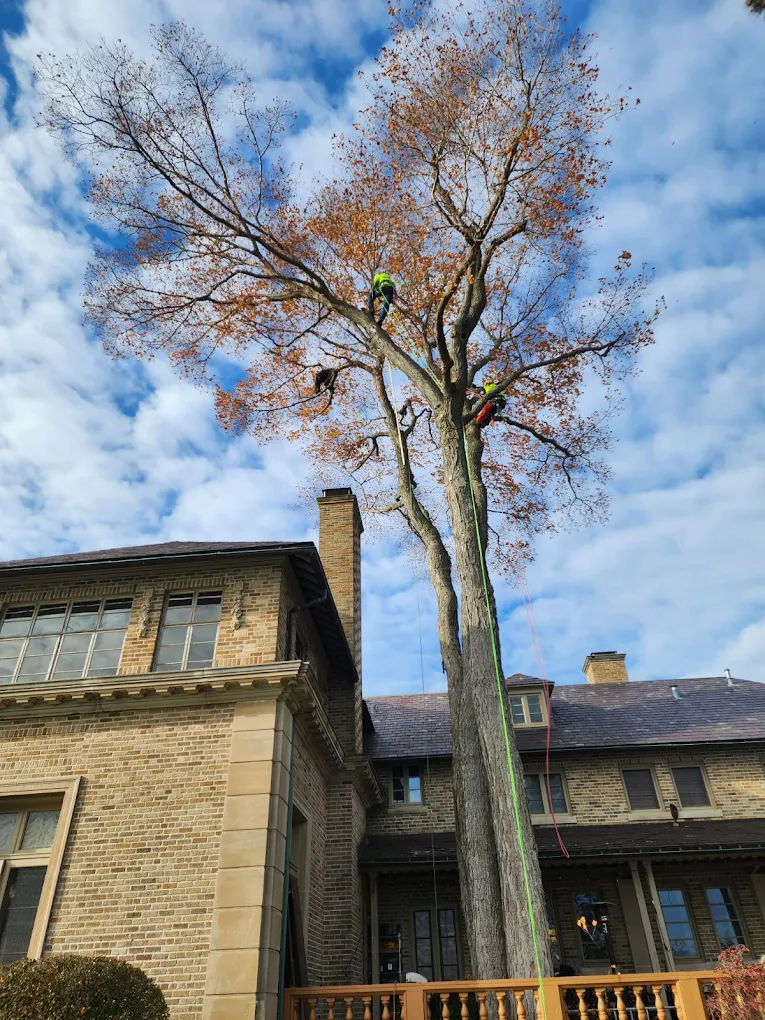
Getting your trees ready for winter is absolutely vital, especially here in Chicagoland. As autumn’s rich colors spread across towns like Chicago, Oak Park, River Forest, and Elmwood Park, homeowners really need to get their yards prepped for the harsh Midwest winter ahead. This effort helps shield your trees and ensures they’re strong and ready to thrive when spring arrives. At Winkler Tree & Lawn Care, we’re dedicated to providing expert, certified services that truly get your trees winter-ready.
Good fall tree care really helps cut down on damage from heavy snows, ice storms, and super cold temperatures, which we see a lot here in Cook County. Without preparation, trees can dry out, get damaged structurally, and become more likely to get pests and diseases. Knowing what your trees need this season is a practical investment in how good your property looks and feels overall.
Why Fall Tree Care is a Must in Chicagoland
Honestly, fall tree care isn’t just an optional chore; it’s a fundamental part of owning property in the Chicago area. The shift from autumn to winter brings specific issues for trees, making this time vital for their long-term survival. Putting in the effort now can prevent expensive problems later on. Plus, a healthy tree canopy boosts your property’s value and curb appeal, making your home feel more welcoming.
The quick temperature drops, freezing rain, and heavy snow that are pretty typical of a Chicagoland winter can really stress out trees that aren’t prepared. Plus, those dry winter winds can totally dehydrate evergreens if their roots aren’t well-hydrated. Our ISA-certified arborists at Winkler Tree & Lawn Care genuinely understand these local challenges. We don’t just offer standard solutions; we focus on custom fall tree care methods that strengthen your trees’ natural defenses against environmental pressures, making them more resilient.
How Chicagoland Winters Hit Your Trees
Honestly, Cook County, Illinois, has a climate that throws some serious challenges at trees. Those constant freeze-thaw cycles? They can cause frost heave, really messing up shallow root systems, and deep cold snaps can damage tree cells. Heavy snow and ice can put a massive strain on branches, leading to breakage, especially if they’re already weak. A complete fall tree maintenance plan, I’d argue, is essential for their resilience. A good plan considers all these factors, making sure your trees stay healthy and safe.
If you don’t take action early, trees can easily fall victim to winter injuries. The real kicker is you might not even see the damage until the following spring or even summer. That delayed reaction means getting involved now is crucial. A fall tree care plan helps fortify trees against these environmental attacks, significantly reducing the chance of major damage and helping them bounce back strong once warmer weather returns.
Your Fall Tree Care Checklist: The Essentials
This detailed fall tree care checklist is your best defense against winter’s harshness. This complete approach covers everything from how strong a tree is structurally to how it takes in nutrients, making sure every part of your tree’s health is looked after. Following these steps can greatly boost your tree’s chances of doing well through its dormant season and really flourishing in the spring. Remember, taking care of things in advance is always more effective and cheaper than fixing problems later.
This checklist is designed to help homeowners in Chicago, Oak Park, River Forest, and Elmwood Park tackle the most important tasks for keeping their trees healthy. Every single item on this list plays a huge role in getting your trees ready for winter and preventing potential damage. Honestly, if you skip even one part of fall tree care, you could actually jeopardize your trees’ overall health and safety. I’d really recommend having a chat with a professional arborist so they can tailor this plan for your specific yard.
Trimming Your Trees Just Right
Professional tree pruning is an incredibly important part of fall tree care. When autumn rolls around and trees drop their leaves, it’s so much easier to spot those dead, diseased, or weak branches that could become a real problem during winter storms. Getting rid of these branches doesn’t just make the tree look better; it also makes it stronger, cutting down the risk of heavy snow and ice causing them to break. Plus, removing these branches allows the tree to focus its energy on healthy new growth.
Our ISA-certified arborists at Winkler Tree & Lawn Care use really precise pruning methods that help trees stay healthy for the long haul. Prune a tree incorrectly, and you can actually harm it, making it an easy target for pests and diseases. That’s why it’s pretty crucial to let experienced pros handle this job. We look at each tree individually, considering its type, age, and overall condition to figure out the best pruning plan for top-notch fall tree care. tree pruning benefits
Feeding Tree Roots Deep Down
Another really important part of fall tree care is deep root fertilization. While trees are getting ready to rest for winter, their root systems are busy socking away nutrients for the colder months and that big growth spurt next spring. Putting a slow-release, nutrient-rich fertilizer right into the root zone in the fall gives them a vital boost, helping the tree handle winter stress better. This method ensures nutrients reach the deepest roots, where absorption is most effective.
This specific fertilization method doesn’t just give trees those essential macro and micronutrients; it also improves the soil structure and microbial activity. A well-fed tree can fight off diseases better, bounce back from tough environmental stuff, and grow more strongly. Plus, deep root fertilization is an ahead-of-time measure for fall tree care. It supports the tree’s overall health and vitality, contributing to its longevity and beauty for years to come.
Keeping Your Trees Hydrated for Winter
Even when temperatures drop, winter watering is still a surprisingly crucial part of fall tree care, especially for new trees and evergreens. Those cold, dry winds of a Chicagoland winter can truly dry out trees fast, leading to ‘winter burn’ or desiccation, which turns leaves brown and crispy. Making sure the soil has enough moisture before it freezes solid helps protect roots and gives them a much-needed water supply during their dormant season. This is incredibly important for evergreen trees that keep their needles all year.
Keep watering deeply until the ground is consistently frozen, usually until late November or early December here in Cook County. Make sure to water slowly and deeply so the moisture really gets down into the root zone instead of just running off. Also, consider using a layer of mulch around the base of trees to help retain soil moisture and regulate soil temperature. This extra step greatly improves your fall tree care.
Dealing with Fall Pests and Diseases
Fall’s actually a great time to get a jump on any pest or disease problems. You know, before they turn into real headaches when everything’s dormant or next spring. Tons of pests try to find cozy spots for winter, hiding in bark cracks or under fallen leaves. Plus, some fungal diseases just love the cooler, damp weather to get started. Spotting and treating these issues as part of your fall tree care routine can really prevent big infestations and infections when your trees are most vulnerable.
Our team at Winkler Tree & Lawn Care can really dig in and inspect your trees, catching those early signs of pests or disease. We then roll out specific plant health care (PHC) plans, which might mean putting on dormant oil, using fungicide treatments, or simply getting rid of infected bits of the plant. This proactive approach to Chicago tree care is crucial for protecting your trees and yard from common threats. Honestly, a complete pest and disease management plan isn’t just nice to have, it’s a must-have for solid fall tree care. fall tree diseases
Prepping Trees for Winter’s Chill: Smart Fall Care
Getting trees ready for the tough parts of winter isn’t just about basic maintenance; it’s about smart planning. You need special methods to ensure they’re healthy and strong. Here in Chicagoland, our winters can be pretty brutal, so taking care of your trees proactively in the fall isn’t just a good idea, it’s often critical for their survival. These extra steps really protect against common winter damage, like branches breaking or roots drying out. Trusting experienced pros means these things get done right.
Winkler Tree & Lawn Care focuses on giving you complete solutions that think about winter’s challenges before they happen. Our way of doing things brings together different methods designed to make your trees strong against heavy snow, ice, and really cold weather. We know that every tree, and every type of tree, has its own specific needs. That’s why our ISA-certified arborists do thorough checks to create fall tree care plans just for you. This tailored approach is vital for long-term tree health and strength.
Cabling and Bracing: Added Support
Trees that have weak branch connections, multiple main stems, or have already been hit by storms could seriously benefit from cabling and bracing. We’d add this as part of their fall tree care. This method involves putting strong steel cables between big limbs and stiff steel rods through weak spots for extra support. That stability helps these vulnerable trees handle the huge weight of snow and ice, which really cuts down on the chance of a limb just snapping off.
Putting cabling and bracing in place during the fall is a smart move, especially for older, valuable trees or ones close to buildings. This is a specialized job, though. You really need certified arborists to do it correctly and make sure it works. If cables or braces aren’t installed right, they can actually cause more harm than good. So, having a professional assess and do the work is super important for this part of fall tree care. Our teams carefully follow OSHA tree trimming safety guidelines for all structural work, which I think is a pretty big deal.
Winter Protection for Young and Sensitive Trees
Young trees, and some more sensitive types, need extra care for their first few Chicagoland winters. Wrapping tree trunks with burlap or special tree wrap can prevent sunscald, a common winter injury that makes bark crack because of changing temperatures. This protective layer also keeps rodents and deer from chewing on tender bark, which can seriously damage or even kill young trees. You’ll definitely want to make sure this kind of winter protection is part of your fall tree care plan.
Also, putting up a temporary windbreak, maybe with burlap and stakes, can shield young evergreens from those brutal winter winds. It really cuts down on moisture loss and drying out. For smaller shrubs and delicate evergreens, just building a simple A-frame or covering them with breathable fabric can provide vital insulation. These protective steps are pretty easy to do, but they’re incredibly good at keeping vulnerable trees safe all through the colder months, making them essential things to think about for complete fall tree maintenance.
Why Professional Arborists are Key for Fall Tree Care
Honestly, bringing in professional arborists is an incredibly valuable step for effective fall tree care, especially with Chicagoland’s unpredictable weather. While you can handle some tree upkeep yourself, a certified arborist’s know-how gives you a huge advantage. They’re great at figuring out tricky problems, using advanced care methods, and stopping future issues. Arborists bring a deep understanding that goes way beyond simple gardening, focusing on the overall health and safety of your valuable trees.
Here at Winkler Tree & Lawn Care, our crew of ISA-certified arborists brings a ton of experience and a real scientific understanding of tree biology to every single job. We’ve got the specialized tools and methods for things like tricky pruning, figuring out what’s ailing a sick tree, and setting up structural support. Plus, our internal review process makes sure all our advice and services meet the highest industry standards. Honestly, trusting professionals with your fall tree care just guarantees a thorough, effective job.
Finding Hidden Problems and Planning for What’s Next
One huge advantage of bringing in pros for fall tree care is their knack for spotting issues you’d never see on your own. Arborists can pick up on tiny signs of pest problems, diseases in their early stages, or even nutrient deficiencies. If you miss these, they could really mess with your tree’s health over winter. Their diagnostic skills are crucial for heading off problems before they get serious. This early detection is a key part of keeping trees healthy.
Beyond just fixing immediate problems, arborists also help you plan for the long game when it comes to tree management. They can recommend the best trees for your yard, suggest ongoing maintenance schedules, and help you understand how your trees grow. This kind of planning makes sure your fall tree care efforts build a healthy, lasting landscape. Their big-picture view is a really useful resource for any property owner. The International Society of Arboriculture (ISA) offers more insights into professional tree care.
Frequently Asked Questions
Why Chicago’s Trees Really Need Fall Care
Fall tree care is crucial for healthy, long-lived trees, especially in Chicagoland’s unique climate. As autumn’s beautiful colors spread across places like Chicago, Oak Park, River Forest, and Elmwood Park, homeowners need to prepare their yards for the tough Midwest winter. This protects your trees and helps them grow strong in spring.
When’s the Best Time to Start Fall Tree Care?
Typically, you’ll want to kick off your fall tree care sometime between late September and November, depending on what the weather’s doing around here. This gives your trees plenty of time for pruning, fertilizing, and getting enough water before the ground freezes solid and they go completely dormant.
Should You Trim Your Own Trees This Fall?
While you might tackle a couple of small, easy branches yourself, anything more complex or high-up really calls for an ISA-certified arborist. Seriously, I’ve witnessed how poor pruning can gravely harm your trees, weakening them or leaving them open to disease. Don’t risk it.
How Can You Tell if Your Trees Need Professional Fall Help?
If you spot dead or broken branches, leaves that look off-color or sparse, any signs of pests, unusual growth, or fungus on your tree’s trunk or branches, that tree probably needs some professional fall care. Honestly, if you notice even one of these, I’d say it’s definitely time to call an arborist.
How does fall tree care help avoid winter damage?
Fall tree care primes your trees for winter by making them stronger through pruning, boosting their nutrients with fertilizer, ensuring they’ve got enough water before the ground freezes, and tackling any pest or disease issues. All these actions combine to toughen up your trees against the cold, wind, and ice.
Is deep root fertilization truly necessary for fall tree care?
Yes, deep root fertilization is a really smart move for your fall tree care routine. It delivers crucial nutrients right to the tree’s roots, helping it store energy for winter and setting it up for robust new growth in the spring. This proactive step significantly improves the tree’s overall health.
Conclusion
Putting together a complete fall tree care plan is absolutely essential for any homeowner in Chicagoland. By addressing your trees’ specific needs in autumn, you’re getting them ready to handle winter’s tough challenges. This makes sure they stay healthy, safe, and beautiful for years to come. From professional pruning and smart fertilizing to specific pest management and winter protection, every step really helps your landscape last.
Don’t just cross your fingers and hope for the best with your valuable trees this winter. Trust the certified folks at Winkler Tree & Lawn Care. They’ll give you fall tree care that’s perfect for the Midwest climate. Our ISA-certified arborists are ready to check out your yard and give your trees exactly what they need to thrive. Call us today at (708) 544-1219 to set up a chat and make sure your trees are well taken care of with expert fall tree care.
