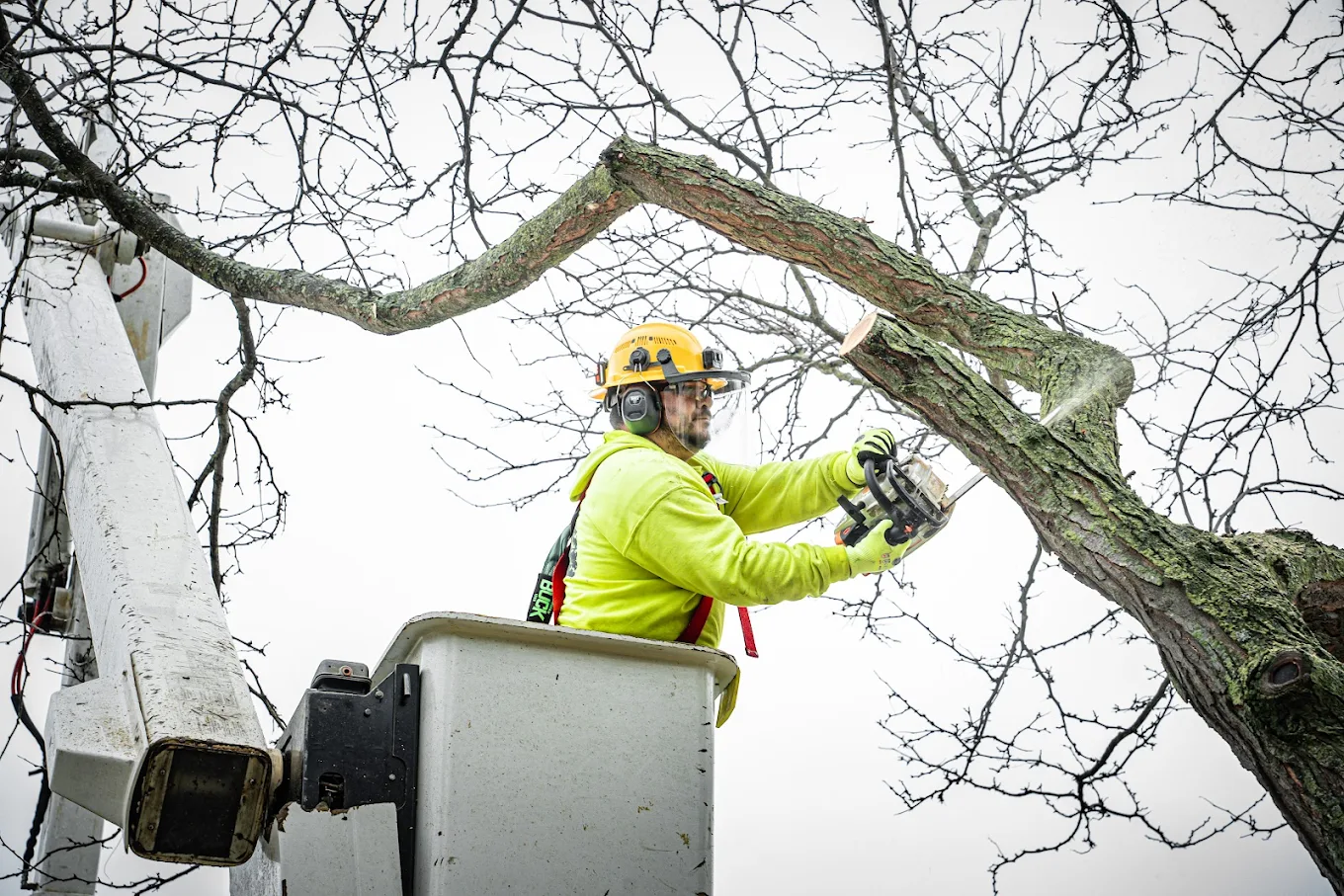
Spring puts tree work back on the list for many homeowners. Limbs look rough after winter, fresh buds show up fast, and it feels like the right time to start cutting. That is often how Tree Pruning Mistakes begin. A few bad cuts can weaken a good tree, slow healthy growth, and leave open wood that draws decay.
For homeowners in Illinois, this topic matters every year. Spring storms, wet ground, and quick growth put extra stress on trees across the Chicago area. This article explains the pruning errors that cause the most trouble, the bad pruning effects they lead to, and what smart Tree Pruning Chicago care should look like. You will know what to avoid and what good work looks like.
Trees do not handle random cuts well
A tree is not a shrub. It is not a hedge. It does not bounce back from rough cutting in the same way.
Every branch has a job. Some branches hold weight. Some shade the bark. Some feed the tree through leaf growth. Cut the wrong limb, and the tree has to spend energy on repair instead of healthy growth.
That is why spring pruning needs a reason behind each cut. Deadwood removal makes sense. Broken limb removal makes sense. Structural pruning on a young tree makes sense. Random thinning does not.
Many homeowners learn this after the damage shows up months later. A tree can look fine right after a pruning job. Then weak shoots pop up, bark gets burned by sun, or decay starts near large wounds. That is the hard part. Bad work does not always look bad on day one.
Cutting off too much live growth
This is one of the most common tree trimming mistakes Illinois homeowners make in spring.
A tree looks full after winter. The yard looks messy. So the natural move is to cut hard and make the canopy look thin and clean. That can put the tree under real stress.
Leaves are food factories. A tree needs them to store energy and support root health. If too much live canopy gets removed in one visit, the tree loses a large part of its food supply. Then it reacts with fast regrowth. That new growth often looks busy and green, but the attachment points are weak.
Storms expose that weakness later. What looked like a quick cleanup can turn into future breakage.
Heavy pruning can expose inner bark too. Branches and trunk sections that stayed shaded for years may burn once direct spring and summer sun hits them. That stress can stay with the tree for a long time.
Topping the crown
Topping is one of the worst Tree Pruning Mistakes in any season, and spring is no exception.
Topping means cutting back major limbs or the top of the tree to stubs or random points. Some homeowners ask for it to lower the height fast. Some crews still offer it as a cheap shortcut. It creates more problems than it solves.
A topped tree often responds with a burst of new shoots near each cut. Those shoots grow fast, but they grow from weak points. They do not have the same strength as a normal branch union. As they get longer and heavier, they become more likely to fail.
The wounds from topping are large too. Large cuts close slowly. That gives decay more time to move into the wood.
Then there is the shape problem. A mature tree has a natural form. Topping strips that away. In many cases, the tree never regains a balanced crown.
A tree that has outgrown its space needs a real plan. It may need selective reduction. It may need a full health review. In some cases, removal is the right call. Topping is not a good substitute for proper pruning.
Cutting too close to the trunk
A flush cut happens when someone removes a branch too close to the trunk or parent limb. That cut takes off the branch collar.
The branch collar matters. It is the slightly raised area where the branch meets the trunk. That part helps the tree close the wound after pruning. If the collar gets removed, the cut is larger than it should be. The tree then has a harder time sealing over that wound.
A flush cut may look clean to a homeowner. It is not clean from the tree’s point of view.
This mistake is common in DIY pruning. People want the branch cut flat against the trunk. That neat look lasts for a day. The damage can last for years.
Leaving long stubs
The opposite mistake causes trouble too.
A stub cut happens when the branch gets cut too far from the trunk and a long piece gets left behind. That stub usually dies back. It does not seal over in a healthy way. Then it becomes a place where insects, fungi, and decay can get started.
Good cuts land in the right zone. Not too close. Not too far. That sounds simple, but it is one of the details that separates careful pruning from damaging pruning.
Pruning at the wrong time for the tree
Spring pruning is not wrong by default. The problem starts when every tree gets treated the same way.
Different species have different timing needs. Oaks are the best-known case in Illinois. Fresh cuts during the wrong window can raise the risk linked to oak wilt spread. Elms and a few ornamental species need timing care too.
This is where local tree knowledge matters. Homeowners often see warm weather and think every tree is ready for a cleanup. Trees do not work on one shared schedule.
For that reason, many people in the Chicago area call trained arborists for pruning advice instead of guessing. Winkler Tree & Lawn Care has served the region since 1975, and the company has seven ISA Certified Arborists on staff. Their team reviews recommendations together, so homeowners get care shaped by tree health and local conditions, not sales pressure.
Using dull or dirty tools
This mistake gets ignored all the time, yet it matters.
A dull blade tears bark and crushes tissue. A sharp blade makes a cleaner cut. Clean cuts give the tree a better chance to close the wound and keep decay out.
Dirty tools create another risk. They can carry disease from one tree to the next. On a property with several trees, that can turn one problem into several.
Homeowners who do small pruning jobs from the ground should clean tools before and after the work. They should sharpen them too. Large limbs and overhead cuts belong with trained crews.
Pruning for looks alone
A lot of bad spring pruning starts with one goal. Make the tree look tidier.
That sounds harmless, but it leads to poor choices. People remove lower limbs just to raise the canopy fast. They strip inner branches to create a thinner outline. They trim ornamentals into shapes that do not fit the species.
A healthy tree and a perfectly even tree are not the same thing.
Trees need branch spacing, leaf area, and shade on their bark. If appearance becomes the only goal, the tree pays the price later. You may see weak outer growth, bare interior branches, or stress in hot weather.
Good pruning respects the natural shape of the species. The tree should look better after the work. It should still look like itself.
Ignoring cracked or storm-damaged limbs
Spring often exposes old winter damage. A branch may be split and still hanging on. A union may be cracked. Deadwood may sit high in the canopy, hidden until the leaves start to come back.
Some homeowners skip past that damage and start shaping the tree instead. That is the wrong order.
Safety and structure come first. A cracked branch can fail in the next storm. A weak limb can drop once leaves add weight. A branch with bark damage may never recover in a healthy way.
A careful pruning visit starts with an inspection. The first cuts should address broken limbs, deadwood, weak attachments, and branches that rub against each other.
Treating pruning like removal
Some crews prune trees as if they are halfway to being removed. They take out major scaffold limbs. They hollow out the center. They remove too much weight from one side. The tree is left with a thin shell of foliage and a long recovery ahead.
That is not careful pruning. That is rough cutting.
Trees need canopy to support healthy growth. They need leaves to feed the root system. They need branch balance to hold up under wind and storm load. When too much gets removed, the tree starts to decline.
This is one reason homeowners look for companies that talk about preservation first. Winkler Tree & Lawn Care builds its work around that idea. The company focuses on long-term tree health, and removal is used when it is truly needed, not as a shortcut. That message fits pruning work just as much as it fits removals.
What bad pruning effects look like later
The hardest part about poor pruning is timing. The trouble often shows up later, not right after the cuts.
A tree may leaf out and seem fine in spring. Then summer reveals the damage. Dead tips appear. Weak shoots shoot straight up from topping cuts. Large wounds stay open. Decay begins inside a major limb. Bark on the trunk gets scorched after too much canopy got removed.
These are the bad pruning effects homeowners end up paying for:
Dead branch ends. Weak regrowth. Slow wound closure. Decay near major cuts. Bark stress. Poor branch balance. Shorter tree life.
That is a steep price for a few careless cuts.
What smart spring pruning looks like
Good pruning starts with purpose. Each cut should solve a clear problem.
Dead branches should come off. Broken branches should come off. Rubbing branches may need attention. Young trees often need structural training. Mature trees may need selective thinning or branch clearance over a roof, walk, or driveway.
Good pruning does not strip the tree. It does not top the crown. It does not force one shape on every species. It does not trade long-term health for a quick clean look.
For large shade trees, older trees, or trees close to the house, professional help is worth it. In the Chicago area, that local knowledge matters even more. Winkler Tree & Lawn Care works across Cook, DuPage, and Lake Counties, and the company pruned more than 15,000 trees last season. Municipal clients trust their crews, and that says a lot about the standard they bring to residential tree care.
A better way to protect your trees this spring
Spring is a good time to look closely at your trees. It is not a good time to rush into random cutting.
The most common Tree Pruning Mistakes come from overcutting, topping, poor timing, and bad cut placement. Those mistakes can change the future of a tree. Good pruning protects health, shape, and safety all at once.
For homeowners who want strong trees and fewer future problems, careful work matters. So does local skill. If you are looking for Tree Pruning Chicago service, look for certified arborists who know Illinois trees and treat them like long-term assets, not quick jobs.
