
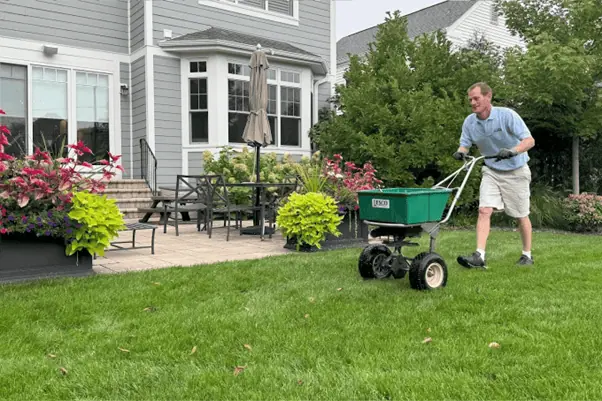
Feeding a yard seems easy. Grass needs food to grow. Trees need food too. Many people think one schedule will work for both grass and trees.. That’s not always true. In Illinois, that plan often falls short. Soil warms slowly, spring weather shifts fast, and trees and turf do not grow at the same pace.
That timing matters more than most people expect. Feed too early, and roots may not use much of it. Feed too heavily, and grass may surge at the expense of nearby trees. This article explains fertilizing trees vs lawn, common timing mistakes, and how our team at Winkler Tree & Lawn Care handles plant health care Illinois homeowners can trust.
Trees and lawns share more than most yards reveal
A yard may look divided into clean sections. You see a lawn, a planting bed, and a few mature trees. Under the surface, those lines fade. Roots overlap, water moves, and every product you spread on one part of the yard can affect another.
This is where many long-term problems begin. A lawn plan built for fast green color can stress a tree over time. A tree can stay quiet for months, then show decline later in the season.
Tree roots reach far beyond the trunk
Most feeding roots sit near the surface. Many extend well past the branch spread. That means lawn products often land in the same soil that supports nearby trees.
A homeowner may think the fertilizer stayed with the grass. In many yards, it did not.
Trees and grass do not use nutrients the same way
Grass grows fast and demands frequent feeding. Trees grow on a slower cycle and store energy over time. A feeding schedule that pushes turf hard can create an imbalance in the shared root zone.
That imbalance often shows up in stress, thin canopies, or slow recovery after heat and storms.
Water movement changes everything
Rain does not stay put. It carries nutrients through the soil and into low spots. In a wet Illinois spring, runoff can move product into places where you never meant to apply it.
That matters for the tree, the lawn, and the broader property.
Timing shapes how roots respond to fertilizer
The calendar matters, but soil conditions matter just as much. Roots only take up nutrients well once the soil wakes up. Illinois yards can look ready on the surface and still stay cold below ground. That gap leads to poor timing and wasted product.
Good fertilization lines up with root activity. It does not chase quick color alone. It works with the season instead of forcing growth too early.
Early spring calls for patience
March can feel like the start of the season. Days get longer, and the yard starts to wake up. Yet soil temperatures often stay cool, and root uptake may still be limited.
A heavy application at that point can sit in place or wash away in spring rain.
Mid spring often gives a better window
By late March into April, many Chicago area lawns and trees start using nutrients more actively. This is often the point where a measured application makes more sense.
That window supports growth without pushing the yard too hard at the start.
Summer changes the risk
Hot weather puts stress on grass and trees. A heavy feeding during heat can create weak top growth and extra water demand. In dry stretches, that stress shows up fast.
A lighter plan usually makes more sense once summer settles in.
Spring fertilization timing Chicago homeowners use should fit the yard, not just the month
A calendar can help, but it should not run the whole plan. Every yard has different sun, soil, drainage, and tree cover. One block in Chicago can dry out fast. Another stays wet for days after a rain. Timing should reflect those real conditions.
This is one reason broad lawn advice often misses the mark. A healthy yard needs more than a date on the calendar. It needs context.
Soil temperature matters more than appearance
Grass can green up before roots fully activate. Trees can bud out and still deal with cold soil below. A yard that looks ready may still not use nutrients well.
That is why timing based on appearance alone can lead to waste.
Tree cover changes the lawn schedule
A shaded yard grows differently from an open one. Large trees reduce sun, change moisture levels, and affect turf growth. Fertilizer plans should account for that.
A lawn under mature oaks does not behave like open turf near the curb.
Rainfall can help or hurt
A light rain can move nutrients into the soil. A hard spring rain can wash product away or push it into unwanted areas. Timing around weather makes a real difference in results.
A rushed treatment before a storm is rarely a smart move.
Fertilizing trees vs lawn takes two different goals
Trees and lawns live side by side, but they do not ask for the same thing. Turf needs steady support for active surface growth. Trees need nutrients that support roots, structure, and long-term health. That difference should shape the feeding plan from the start.
A one-size-fits-all treatment often favors the lawn. The tree pays for that later. Then homeowners call about thinning leaves, weak growth, or early stress.
Lawns respond fast
Grass often shows the effect of fertilizer within days. The color deepens, and top growth speeds up. That quick response can make a treatment look successful even if the yard is heading out of balance.
Fast green color is not the same as long-term health.
Trees respond over a longer stretch
A tree uses nutrients over time. Root health, leaf size, canopy density, and recovery all tell the story, but not overnight. This is one reason tree care requires patience.
The best result is often less dramatic and more durable.
Product choice affects the outcome
Fast liquid products can act quickly, but they move quickly too. Slow-release granular products feed over a longer period. That slower pace often fits mixed tree and lawn properties much better.
Winkler Tree & Lawn Care uses that slower method in its lawn program for a reason. It gives the yard a steadier feeding pattern and reduces runoff.
Common fertilization mistakes show up slowly
Most yards do not fail all at once. Problems build over time. A lawn gets fed too hard. A tree root zone gets more product than intended. A shaded area struggles, then the homeowner adds more fertilizer, and the cycle continues.
That slow build makes the mistake easy to miss. The yard still looks decent for a while. Then decline starts to show.
Treating every area the same
Front yard, side yard, back yard, and tree ring areas rarely need the same rate. Sun, traffic, and root competition vary across the property.
Uniform treatment often creates uneven results.
Feeding for color instead of health
A dark green lawn can look impressive for a short time. But heavy feeding can push weak growth that needs more water and more mowing. Nearby trees feel that added competition.
Healthy growth should stay steady, not forced.
Ignoring the tree root zone
This is one of the biggest issues we see. A lawn company feeds the grass but never accounts for major roots below. Those roots take in part of that treatment too.
That matters even more in older Chicago neighborhoods with mature trees.
Plant health care Illinois properties need starts with the whole site
A tree should not be evaluated alone, and a lawn should not be treated alone. Soil, roots, drainage, and past stress all connect. A better plan starts with the full property and builds from there. That is the core idea behind plant health care.
This is not about doing more treatments. It is about making better decisions. A careful plan often uses fewer inputs and gets a better result.
Soil conditions set the baseline
Compacted soil limits air and water movement. Poor drainage keeps roots stressed. Low organic matter reduces the soil’s ability to hold nutrients.
You can spread fertilizer on that yard, but the response may stay weak.
Targeted applications reduce waste
Spot weed treatment keeps extra chemical off healthy turf. Measured fertilizer rates reduce runoff and avoid excess growth. That kind of control protects nearby trees.
This method fits Winkler’s preservation-first mindset.
Long-term care beats quick fixes
A yard fed on a sound schedule holds up better over time. Trees recover better from storms. Lawns stay steadier through seasonal swings. The property feels healthier as a whole.
That kind of result takes timing, restraint, and a plan.
Get the timing right for tree and lawn fertilization in Illinois
A healthy Illinois yard does not come from feeding everything at once and hoping for the best. Timing matters. Product choice matters. The relationship between turf and trees matters. Once those pieces line up, the yard has a much better chance to grow evenly and stay healthier through the season.
Our team at Winkler Tree & Lawn Care has worked with Chicago-area properties since 1975. We look at the whole site, not just the grass or just the tree. That matters in spring. It matters in summer. And it matters for homeowners who want a yard that supports both strong turf and healthy trees year after year.
