A dead branch hanging over your driveway might not seem like an urgent problem during a calm fall afternoon. But once Chicago's winter weather brings heavy snow, ice, and strong winds, that same branch may become a bigger concern.
Yes, removing dead tree branches before winter is often a good idea, especially when they are large, visibly damaged, or located above homes, sidewalks, and other frequently used areas. Deadwood can become more brittle over time, and added weight from snow or ice may increase the chance of breakage.
However, not every dead branch requires immediate removal. Its size, position, condition, and surroundings all matter.
Understanding when to schedule tree trimming and when to leave a tree alone can help Chicago-area homeowners protect their property without unnecessary pruning.
Why Dead Branches Can Be a Problem During Winter
Living branches contain flexible tissues that help them respond to movement and changing weather conditions. Once a branch dies, those tissues gradually lose moisture, and decay may begin breaking down the wood.
A dead limb can remain attached for months or even years. But its attachment may weaken as the wood deteriorates.
Winter adds another challenge.
Wet snow can accumulate on branches, while freezing rain coats them in ice. This extra weight can place stress on already weakened wood. Strong winds may increase the force acting on the branch.
A branch doesn't have to be completely rotten to break. Existing cracks, weak attachments, and previous damage can also contribute to failure.
The location of the branch makes a difference. A dead limb above an open lawn presents a different concern than one hanging directly over a roof, driveway, or entrance.
Removing selected dead branches can reduce certain risks, although no pruning work can guarantee that a tree will withstand every winter storm.
How Can You Tell If a Tree Branch Is Dead?
During the growing season, a dead branch may be easy to recognize because it has no leaves while the surrounding canopy remains green.
Once trees lose their leaves in fall, identifying deadwood becomes harder.
Start by looking at the tree from the ground and comparing its branches. You may notice differences in bark condition, shape, and visible damage.
Common signs include:
- Missing or peeling bark: Older dead branches may lose patches of bark as the wood deteriorates.
- Dry, broken twigs: Small brittle twigs or broken ends may indicate dead growth.
- Fungal growth: Certain fungi growing directly from a branch can indicate decaying wood.
- Previous-season dieback: A branch that remained leafless throughout spring and summer may already be dead.
- Hanging or partially detached limbs: Broken branches caught in the canopy may remain dangerous even when they haven't fallen.
These signs are useful clues, but they don't always confirm that a branch is dead.
Some tree species naturally shed smaller interior branches as their canopies develop. Others have bark that peels as part of normal growth.
A professional tree inspection can help distinguish deadwood from living branches that simply look different.
Avoid climbing the tree or breaking branches to test their condition, particularly when larger limbs are overhead.
Should All Dead Branches Be Removed Immediately?
Not necessarily.
The decision to remove dead branches should consider both the branch's condition and what could happen if it falls.
For example, a small dead twig within an otherwise healthy tree may not require urgent attention. A large dead limb extending over a driveway deserves a closer look because people and vehicles may regularly pass beneath it.
Three factors are especially useful when deciding how soon to act.
1. The Size of the Branch
Larger branches carry more weight and can cause greater damage if they fall.
A small dead twig is usually less concerning than a heavy limb attached high in the canopy. Professional pruning is particularly important when the work involves large branches that cannot be reached safely from the ground.
2. What Is Beneath the Branch
A dead branch over a roof, garage, play area, or busy walkway may deserve attention sooner than one over an unused section of yard.
Tree risk is partly about what could be affected if a branch fails, not simply whether the branch has died.
3. Whether the Branch Is Already Damaged
A fully attached dead branch and a partially broken limb are not the same situation.
A branch with a fresh crack or one hanging loosely in another branch may require prompt professional attention.
If you notice a large suspended limb, keep the area beneath it clear until it can be assessed.
Is Fall or Winter Better for Removing Dead Tree Branches?
Both seasons can be appropriate for dead branch removal.
According to University of Illinois Extension's winter tree preparation guidance, fall pruning should generally focus on dead or damaged branches, while other routine pruning is better delayed until trees are dormant.
Illinois+1
This distinction is important.
Removing deadwood is different from shaping the canopy, reducing healthy growth, or carrying out major structural pruning.
For many deciduous trees in Illinois, late winter is a suitable time for planned pruning because the tree is dormant and its branch structure is easier to examine.
Species-specific considerations still matter. Oaks, for example, face a risk from oak wilt when fresh pruning wounds attract insects that can spread the disease during warmer months. Illinois guidance recommends avoiding routine oak pruning from March through October.
Illinois+1
A branch that presents an immediate hazard shouldn't simply be ignored because the calendar isn't ideal. A qualified tree-care professional can determine the appropriate response and precautions.
The best pruning schedule depends on the tree, the type of work, and the reason the branch needs attention.
Why Removing Dead Branches Incorrectly Can Harm a Tree
Dead branch removal may sound straightforward, but incorrect cutting can create unnecessary wounds or damage healthy wood.
Trees respond to pruning cuts by forming protective boundaries around injured areas. They do not heal wounds in the same way that human skin does.
When a branch is removed, the location of the cut matters.
Most branches have a slightly swollen area near their attachment called the branch collar. This area contains tissues that help the tree respond to a wound.
Cutting too close to the trunk can damage the branch collar. Leaving a long stub can also interfere with the tree's normal response and allow deadwood to remain.
Another common mistake is removing too much living growth along with the dead branches.
Some homeowners assume that cutting back the entire canopy will make a tree more resistant to winter storms. In reality, excessive pruning can weaken the tree and encourage undesirable regrowth.
Professional tree pruning focuses on making appropriate cuts while preserving healthy structure.
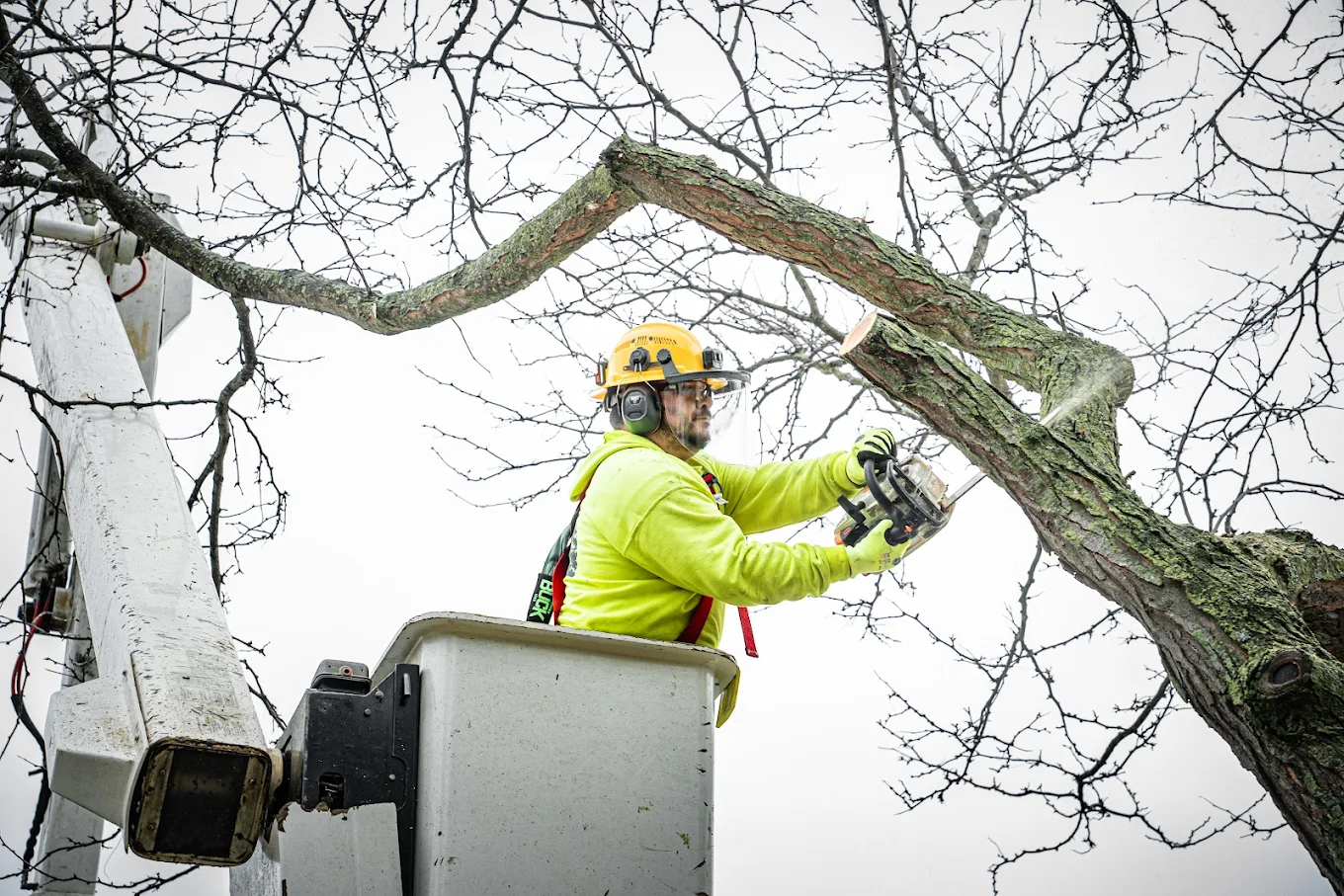
For larger trees, trained crews also have the equipment needed to manage heavy limbs and work around buildings or other obstacles.
Can Dead Branches Mean the Whole Tree Is Dying?
A few dead branches don't necessarily mean the entire tree is unhealthy.
As trees grow, shaded interior branches sometimes decline because they receive less sunlight. Isolated branch death can also occur after weather damage or other localized stress.
However, widespread dieback may indicate a problem affecting more of the tree.
Possible causes include root damage, drought stress, disease, insects, or changes in the surrounding soil.
Pay attention to the pattern.
If one small interior branch dies, the cause may be different from a situation where large sections of the canopy are losing leaves or branches are dying throughout the crown.
Removing the dead branches may address the immediate concern without resolving the underlying cause.
That's where professional tree health care can be valuable.
An arborist can examine the canopy, trunk, roots, and growing conditions to help identify possible causes before recommending further work.
This preservation-focused approach is especially useful for mature shade trees that contribute to Chicago-area neighborhoods.
When Should You Schedule Professional Tree Trimming?
Professional tree trimming makes sense when dead branches are large, difficult to reach, or positioned near structures and frequently used spaces.
It may also be appropriate when the same tree develops new deadwood year after year or shows other changes that could indicate declining health.
At Winkler Tree & Lawn Care, our approach to pruning starts with understanding the tree rather than simply removing branches.
Our tree-care professionals assess branch condition, structure, and the surrounding property before recommending the appropriate work. Some trees need selected deadwood removal, while others may benefit from broader structural pruning or a plant health care evaluation.
For homeowners seeking tree pruning services in Chicago and nearby communities, this helps connect the work to the tree's actual needs.
A professional assessment can also help separate concerns that deserve attention before winter from routine work that can be planned for the dormant season.
Protect Your Trees Before Chicago's Winter Weather
Dead branches can become a greater concern when winter storms add snow, ice, and wind to an already weakened limb.
Removing selected deadwood before winter can be a sensible way to reduce risk, especially around homes, driveways, and walkways. But removing every questionable branch isn't always necessary, and proper pruning technique matters.
At Winkler Tree & Lawn Care, we focus on preserving healthy trees while addressing structural concerns that may affect your property.
Our team provides professional tree pruning, trimming, tree health services, and removal throughout Chicago and surrounding communities.
If you've noticed dead branches on your property, contact Winkler Tree & Lawn Care to request an evaluation and quote.