
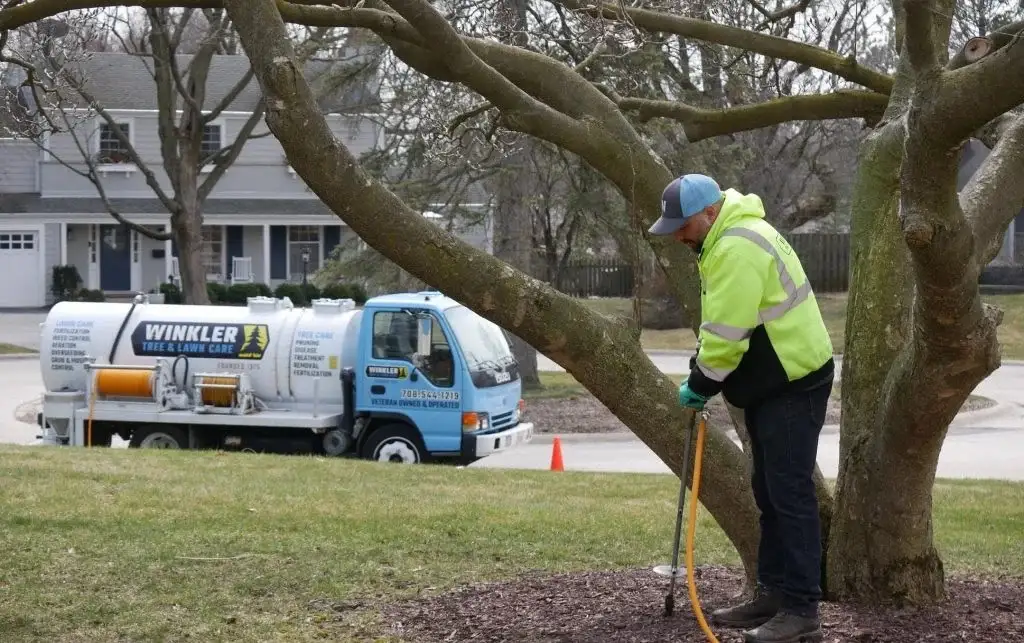
A Chicagoland winter asks a lot of every tree. Cold wind can dry evergreen foliage, changing temperatures can stress thin bark, ice and snow can add weight to branches, and frozen soil can limit a young tree’s access to moisture. The best response is not a last-minute rush once the first hard freeze appears. It is a practical fall plan that protects the soil, roots, trunk, and structure of the trees you want to keep for decades.
At Winkler Tree & Lawn Care, we believe trees are valuable living assets. Since 1975, our locally owned team has cared for trees and lawns across Cook, DuPage, Lake, and surrounding Illinois counties. With seven ISA Certified Arborists and TCIA Accreditation, we approach winter preparation as part of a bigger goal: preserving Chicagoland’s urban forest while helping each property stay healthy, safe, and enjoyable.
Use this checklist to prepare your trees and soil before winter conditions arrive.
1. Start at the Root Zone, Not the Branch Tips
A tree’s root zone is where winter preparation begins. In city and suburban settings, roots often grow in soil that is compacted, restricted by pavement, or competing with turf. The Morton Arboretum notes that these conditions can make it harder for air and water to reach roots. That is why the ground beneath a tree deserves as much attention as the branches above it.
Avoid unnecessary digging, cutting, or heavy traffic over roots. If the tree needs soil improvement, root-zone evaluation, or girdling-root work, a certified arborist can determine the appropriate next step. The goal is to protect the fine roots that absorb water and nutrients, not create new stress just before winter.
2. Mulch Correctly and Avoid the “Volcano”
A layer of organic mulch is one of the most effective ways to support a tree through seasonal change. Mulch helps moderate temperature swings, conserve soil moisture, reduce competition from turf and weeds, and create a buffer against mower and string-trimmer damage.
The details matter. The Morton Arboretum recommends an even 3- to 4-inch layer of mulch over the tree’s root zone, held 2 to 3 inches away from the trunk. University of Illinois Extension likewise advises keeping mulch several inches away from the trunk, because the mulch should protect roots without holding moisture directly against the bark.
Do not pile mulch against the trunk in a cone or volcano shape. That practice can promote bark decay and create conditions that are unfavorable for long-term tree health. Instead, imagine a wide, flat donut: mulch across the soil, a clear gap around the trunk, and as much practical coverage of the root zone as the site allows.
A wide mulch ring also helps separate tree roots from turf. This matters because trees and grass compete for water, nutrients, sunlight, and space. Winkler’s approach to lawn care accounts for that relationship. Our program uses slow-release granular fertilizer and hand-targeted weed control to reduce unnecessary herbicide exposure and support a healthier lawn ecosystem without losing sight of nearby trees.
3. Water Before the Ground Freezes
Cold temperatures do not erase a tree’s need for water. If autumn has been dry, deep watering before the ground freezes can help increase the moisture available to roots through winter. University of Illinois Extension recommends deep watering during dry fall weather and notes that watering during brief winter thaws can further lessen winter burn for susceptible evergreens.
Pay particular attention to trees that were planted within the last two years. The Morton Arboretum explains that young trees need frequent watering during their early establishment period, and even mature trees benefit from watering when weather is dry. Check the soil rather than watering by habit. If the soil below the mulch is dry, water slowly at the base so moisture reaches the root zone instead of running off the surface.
Evergreens may need special consideration because they continue to lose water through needles or leaves during winter. Wind and sun can accelerate that moisture loss, creating brown or scorched foliage known as winter burn. Adequate fall moisture, proper mulching, and site-appropriate wind protection can help reduce this stress.
4. Protect Young, Thin-Barked Trees
Young maples, lindens, apples, ashes, and other thin-barked trees can be vulnerable to sunscald and frost cracks. These injuries occur when winter sun warms the bark and outer wood during the day, followed by a rapid temperature drop after sunlight fades. The expansion and contraction can damage cells or lead to vertical cracking along the trunk.
A young tree exposed to bright winter sun, especially on its south or southwest side, may benefit from a protective trunk wrap. University of Illinois Extension advises applying wraps in November and removing them in April. Leaving a wrap on year-round can cause damage or restrict growth.
5. Look Up for Structural Concerns Before Snow and Ice Arrive
Fall is a good time to look for broken limbs, deadwood, hanging branches, cracks, weak unions, or branches that interfere with driveways, sidewalks, roofs, or utility access. A professional inspection can identify pruning opportunities that support structure and reduce risk without over-pruning the tree.
Avoid late-summer pruning that encourages tender new growth too close to cold weather. University of Illinois Extension notes that new growth may not harden off in time and can be vulnerable to frost damage. For larger trees and elevated branches, do not climb a ladder or attempt extensive work yourself. The Morton Arboretum advises using a certified arborist for jobs that cannot be completed safely from the ground.
When snow accumulates on branches, avoid shaking them. Frozen branches can be brittle and may break more easily. If it is safe to do so from the ground, gently sweep loose snow upward with a broom. Ice is usually best left to melt rather than chipped or forcefully removed.
6. Coordinate Lawn Care and Tree Care
A healthy lawn and healthy trees can coexist, but they should not be managed as completely separate systems. Tree and turf roots often occupy the same upper soil layers, which means they can compete for water and nutrients. That competition is especially important around young trees where turf can take up a large share of available resources.
Winkler’s lawn care is built around this connection. We use slow-release granular fertilizer, manually spread by trained technicians, and we apply weed control by hand only where it is needed. This approach reduces unnecessary blanket application and helps minimize impacts on the broader ecosystem and nearby tree roots.
Fall can be an important season for cool-season turf, including core aeration and overseeding where appropriate. But keep the tree’s root zone in view. Do not treat every part of the lawn as identical. A wide mulched area around young trees can reduce turf competition and give roots a better chance to establish.
7. Build a Winter Plan That Preserves What You Value
The best winter plan is not a list of products or quick fixes. It is a clear understanding of your property’s trees, soil, lawn, and long-term goals. Start with the trees that matter most: a new planting, a mature shade tree, a screen of evergreens, or a tree near a home, driveway, or public sidewalk. Then identify what each one needs before winter.
For some properties, the answer is as simple as correcting mulch and watering during a dry fall. Others may need young-tree protection, structural pruning, root-zone care, lawn aeration, plant health care, or an arborist assessment. Winkler’s salaried arborists focus on long-term, preservation-minded recommendations rather than commission-based upselling.
Frequently Asked Questions
1. How much mulch should I put around a tree before winter?
The Morton Arboretum recommends an even mulch layer 3 to 4 inches deep, spread over the root zone and held 2 to 3 inches away from the trunk. Do not pile mulch against the bark.
2. Should I water trees in fall before the ground freezes?
If fall rainfall has been limited and soil is dry, deep watering can help replenish moisture in the root zone before winter. Young trees need especially consistent moisture while they establish, and evergreens may benefit from adequate moisture to help reduce winter burn.
3. Do young trees need trunk wrap in Chicagoland?
Some young, thin-barked trees may benefit from wrap protection against sunscald and frost cracking. Illinois Extension recommends applying a wrap in November and removing it in April. Ask an arborist whether your specific tree and site require it.
4. Can lawn care harm nearby trees?
Tree and turf roots compete for water, nutrients, and space. Products can affect both systems when misapplied. Winkler’s lawn care is designed with trees in mind, using slow-release granular fertilizer and targeted weed control rather than broad blanket applications.
Ready to Protect Your Chicagoland Trees This Winter?
Proper mulching, root-zone care, seasonal watering, and thoughtful young-tree protection can make a meaningful difference before winter weather arrives. Winkler Tree & Lawn Care provides tree care, plant health care, pruning, root-zone support, and lawn programs designed to coexist with the trees that make Chicagoland neighborhoods greener and more resilient.
Request a quote to schedule a property assessment with our local team and build a preservation-first plan for your trees and lawn.
References
Winkler Tree & Lawn Care, “Winkler Tree & Lawn Care.” https://winklertree.com/
University of Illinois Extension, “Protect Trees From Winter’s Wrath With a Few Preventive Steps.” https://extension.illinois.edu/news-releases/protect-trees-winters-wrath-few-preventive-steps
The Morton Arboretum, “How to Care for Trees.” https://mortonarb.org/plant-and-protect/chicago-region-trees-initiative/how-to-care-for-trees/
Winkler Tree & Lawn Care, “Lawn Care.” https://winklertree.com/lawn-care/
