A large tree with green leaves and a full canopy might appear perfectly healthy. But what you see above ground doesn't always tell the whole story.
Yes, a healthy-looking tree can still be dangerous. A tree may continue producing leaves even when it has internal decay, damaged roots, weak branch attachments, or structural problems that could increase its risk of failure.
This doesn't mean every older or unusual-looking tree is unsafe. Many trees live for decades with minor defects that never lead to serious problems.
The important part is knowing which changes deserve attention.
For homeowners and property managers throughout Chicago and the surrounding suburbs, recognizing these seven hazardous tree signs can help you decide when a professional tree inspection makes sense.
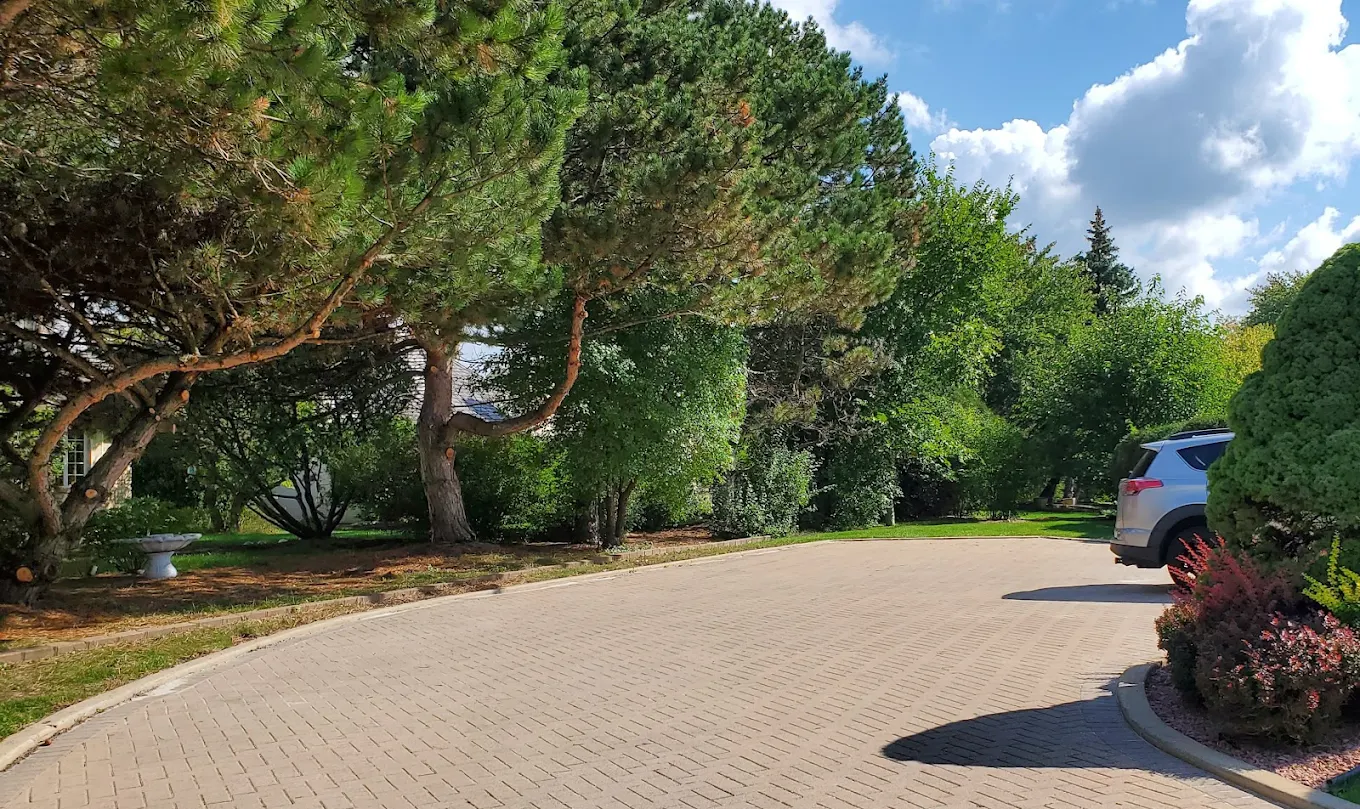
Why a Healthy Tree Can Still Have Structural Problems
Tree health and tree structure are related, but they aren't the same thing.
A tree's leaves can remain green because its roots and living tissues are still moving water and nutrients through the tree. Meanwhile, decay may be developing inside part of the trunk or a large branch.
The tree may continue growing even though some of its wood has lost strength.
Roots create another challenge. A tree can have a healthy-looking canopy while its root system has been affected by construction, soil compaction, or damage below ground.
That's why professional tree risk assessment considers more than leaf color. An arborist examines the tree's structure, condition, surroundings, and the potential consequences if a branch or trunk fails.
Here are seven signs worth checking from a safe location.
1. Large Cracks in the Trunk or Major Branches
A visible crack in a tree's trunk is one of the clearest reasons to investigate its structural condition.
Not every line in the bark is a dangerous crack. Some trees naturally develop deep bark ridges as they mature. However, a split that extends into the wood or appears to be widening deserves attention.
Look for cracks near:
- The main trunk
- The point where two large stems meet
- Major branches extending over buildings or walkways
A crack can develop because of wind stress, previous damage, or structural weaknesses in the wood.
Some cracks remain stable, while others may worsen as the tree moves.
A fresh or widening split is more concerning than ordinary bark texture.
If you notice a major crack, avoid standing beneath affected branches. A qualified arborist can examine the location, size, and surrounding wood to determine the appropriate response.
2. Mushrooms or Fungal Growth Around the Trunk
Mushrooms growing near a tree can be a normal part of the landscape. Many fungi live in soil and break down organic matter without harming living trees.
However, certain fungal growths on a trunk, exposed roots, or the base of a tree may indicate wood decay.
Some fungi produce shelf-like structures attached to the trunk. Others form mushrooms near decaying roots.
The important distinction is where the growth appears and what type of fungus is present.
A mushroom in the lawn doesn't automatically mean the nearby tree is dangerous. Fungal growth emerging directly from the trunk or major roots may deserve closer examination.
Decay can affect the strength of wood even when the canopy looks healthy.
Because different fungi behave differently, visual identification alone may not reveal how much structural damage exists.
A professional tree inspection can help determine whether further investigation is necessary.
3. A Tree That Suddenly Starts Leaning
Some trees grow at an angle for their entire lives.
A tree might lean toward sunlight or develop an unusual shape because of growing conditions. A long-standing lean does not automatically make it unsafe.
A new or rapidly changing lean, however, is a different concern.
Pay attention if a tree that previously stood upright now appears tilted, especially after strong winds or heavy rain.
Other warning signs may include soil lifting on one side of the trunk or new cracks in the ground around the root area.
These changes can indicate that part of the root system has shifted or lost its grip on the surrounding soil.
Tree roots provide both support and stability. When major structural roots are damaged, a tree may become less secure even if its branches remain green.
Don't attempt to straighten a large leaning tree with ropes or equipment.
If the lean developed suddenly, keep people and vehicles away from the area and arrange a professional assessment promptly.
4. Dead or Broken Branches Hidden in a Full Canopy
A tree can have plenty of healthy leaves and still contain large dead branches.
This is especially easy to overlook during summer when dense foliage hides the inner canopy.
Dead branches lose flexibility as their wood deteriorates. They may break during strong winds, snowstorms, or other weather conditions.
However, not every dead twig presents a significant hazard.
The size and location of the branch matter.
A small dead branch high above an open area is different from a large dead limb hanging over a driveway or outdoor seating area.
During a tree inspection, look for:
- Large branches with no leaves during the growing season
- Broken limbs caught in the canopy
- Branches with missing bark and obvious decay
- Deadwood extending over frequently used areas
Chicago's winter weather can place additional stress on already weakened limbs.
Professional tree pruning can address selected dead or damaged branches while preserving the healthy portions of the tree.
The goal is not to remove every branch that looks imperfect. It's to identify work that meaningfully improves the tree's condition or reduces risk.
5. Hollow Areas or Cavities in the Trunk
Finding a hole in a tree trunk can be alarming.
A cavity may develop after an old branch breaks, a wound becomes infected, or decay organisms gradually break down wood inside the tree.
But a hollow tree does not automatically need to be removed.
Some mature trees can remain standing for years with cavities because the surrounding living wood continues to provide structural support.
The real question is how much sound wood remains and whether the tree can support the loads placed on it.
A small cavity near an old branch wound may have different implications from extensive decay near the base of the trunk.
Arborists may consider the cavity's size, location, surrounding wood, tree species, and overall structure before recommending a course of action.
Never try to fill a hollow trunk with concrete or seal a cavity simply to make the tree stronger. These methods do not restore decayed wood.
When a cavity raises concerns, an arborist can determine whether monitoring, further testing, pruning, or removal is appropriate.
6. Weak Connections Between Large Branches
Some of the most important tree defects occur where branches or stems meet.
Trees sometimes develop two large upright stems growing close together. These are known as co-dominant stems.
When the connection is narrow and bark becomes trapped between the stems, the attachment may be weaker than a well-formed branch union.
This trapped material is called included bark.
Unlike a strong union where wood grows securely together, included bark can interfere with the development of a solid connection.
Over time, the growing stems may push against one another, creating additional stress.
Not all trees with multiple trunks are dangerous. Some species naturally grow in multi-stem forms, and their structure may remain stable.
However, a narrow V-shaped union between two heavy stems may warrant professional inspection, particularly when the tree stands close to a home or busy walkway.
Depending on the tree's condition, an arborist may recommend selective pruning, structural support, or monitoring.
Removing the entire tree is not always necessary.
7. Root Damage or Changes Around the Base of the Tree
A tree's root system is largely hidden underground, making root problems difficult for homeowners to recognize.
Yet roots are essential for both tree health and stability.
Construction work, trenching, repeated vehicle traffic, and changes in soil level can damage roots without causing immediate visible changes in the canopy.
For example, a mature tree may continue producing green leaves after nearby excavation has removed some of its supporting roots.
Symptoms of root damage can take time to develop.
Watch for unusual changes such as exposed broken roots, fresh soil cracks, lifting ground near the trunk, or a newly developing lean.
Also consider the property's recent history.
Was a driveway replaced near the tree? Was soil added around the trunk? Did construction equipment repeatedly travel across the root area?
These details can help an arborist understand possible causes of stress or instability.
Not every exposed root is damaged. Surface roots are normal for many mature trees, and cutting them simply because they interfere with mowing can create additional problems.
A professional assessment can help distinguish ordinary root growth from conditions that may affect tree stability.
Does One Warning Sign Mean a Tree Needs Removal?
Not necessarily.
Finding a cavity, dead branch, or unusual trunk shape does not automatically mean the tree is dangerous enough to remove.
Tree risk depends on several connected factors, including the condition of the tree, the likelihood of failure, and what might be affected if a failure occurs.
For example, a weakened branch over an unused wooded area may present a different level of concern than a similar branch above a home entrance.
A professional tree risk assessment helps bring those factors together.
An arborist may recommend pruning, continued monitoring, structural support, or other preservation work. Tree removal becomes an option when the problem cannot be managed reasonably or the tree's condition makes preservation unsuitable.
This distinction matters in established Chicago neighborhoods, where mature trees provide shade, character, and important environmental benefits.
Removing a valuable tree unnecessarily can mean losing decades of growth.
At the same time, ignoring meaningful structural defects can expose people and property to avoidable hazards.
The best decision comes from understanding the actual condition of the tree rather than judging it by appearance alone.
When Should You Schedule a Professional Tree Inspection?
Some warning signs deserve more immediate attention than others.
A tree that suddenly leans, has a fresh major trunk split, or shows signs of root movement may require prompt assessment. Keep the affected area clear while arranging appropriate help.
Other concerns, such as older cavities or gradual branch changes, may allow time for a planned evaluation.
A professional inspection is also worth considering when a large mature tree grows close to structures or frequently used areas and hasn't been evaluated in some time.
Certified arborists are trained to examine tree health and structure, recognize potential defects, and recommend suitable management options. However, even a detailed inspection cannot guarantee that a tree will never fail.
For homeowners looking for tree inspection services in Chicago, choosing a company that values preservation can make a difference in how recommendations are approached.
Winkler Tree & Lawn Care emphasizes tree preservation and plant health care alongside professional pruning and removal. Our goal is to recommend work that fits the tree's condition and the property owner's needs.
Protect Your Trees With the Right Professional Guidance
A green canopy is a positive sign of tree health, but it doesn't tell you everything about structural stability.
Cracks, dead branches, cavities, fungal growth, weak attachments, root damage, and sudden leaning can all deserve closer attention.
The key is understanding that a warning sign is a reason to investigate, not an automatic reason to remove the tree.
At Winkler Tree & Lawn Care, we help Chicago-area homeowners and property managers make informed decisions about their trees.
Our certified arborists evaluate tree conditions and recommend appropriate care, from targeted pruning and plant health services to removal when necessary.
Concerned about a tree on your property? Contact Winkler Tree & Lawn Care to request an evaluation and discuss the best next step for your landscape.