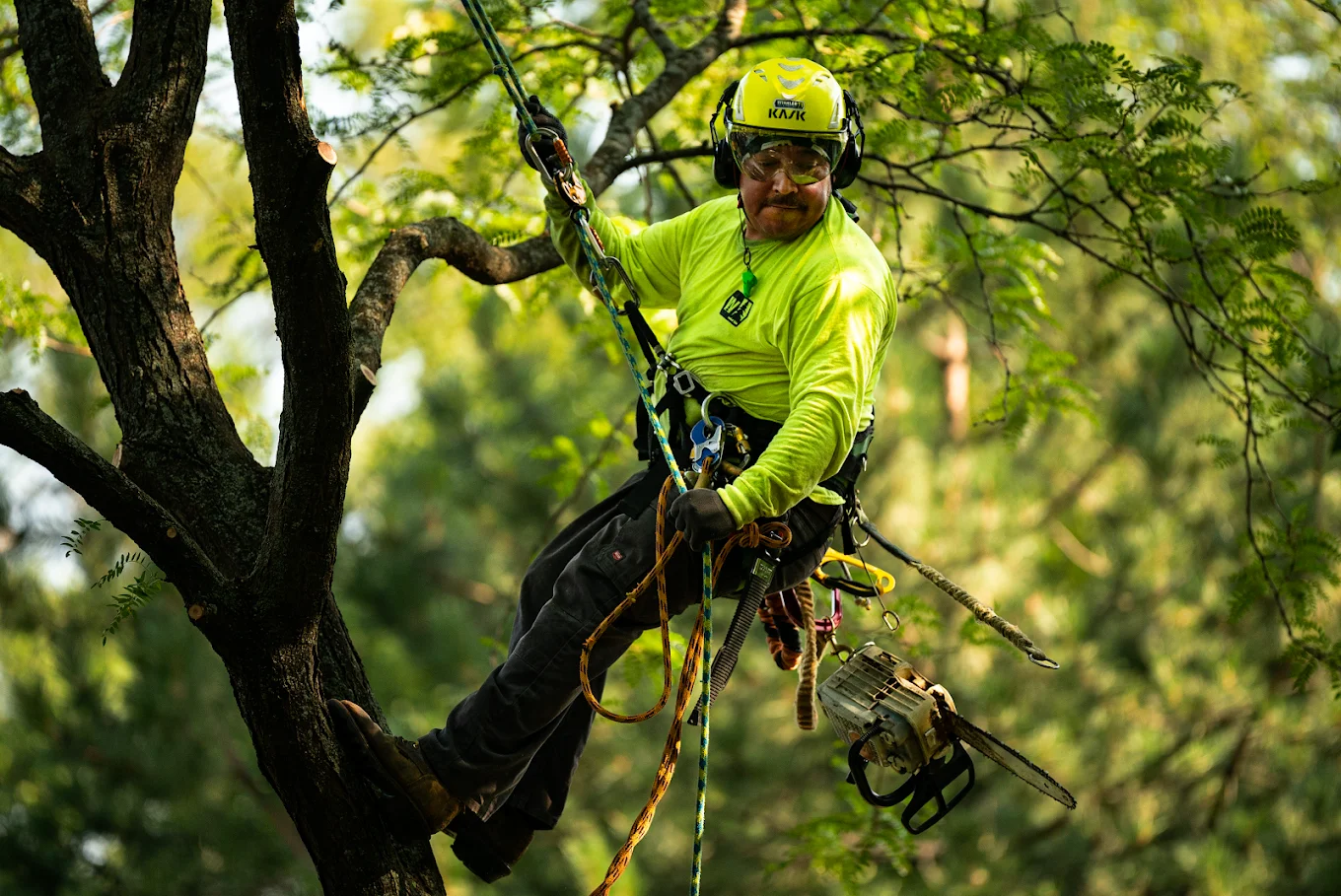
Chicago winters can be tough on trees. Heavy snow, freezing rain, strong winds, and changing temperatures can put extra pressure on branches, trunks, and root systems. Even trees that look healthy in the fall may have structural weaknesses that become more noticeable when winter weather arrives.
The best way to prepare trees for winter is to inspect them before severe weather, address weak or damaged branches, protect vulnerable roots, and make sure they have the moisture they need before the ground freezes.
For homeowners throughout Chicago and the surrounding suburbs, a little planning can help reduce winter tree damage while supporting healthy growth when spring returns.
Why Snow and Ice Can Damage Trees in Chicago
Snow and ice don’t affect every tree the same way. Some branches bend under extra weight, while others crack or break. A tree’s species, branch structure, age, and overall condition all influence how it responds.
Wet, heavy snow is especially challenging because it can collect on branches and increase the weight they must support. Ice creates another problem. It coats branches and adds weight that can put stress on weak attachments.
Trees with narrow branch connections, multiple main stems, or existing damage may be more vulnerable.
According to the University of Illinois Extension’s guidance on winter tree damage, some branches that bend under snow can recover after the weight disappears. Broken branches, however, may require professional attention.
Illinois+1
The goal isn’t to make a tree completely stormproof. It’s to identify problems that can reasonably be corrected before winter weather adds more stress.
1. Inspect Your Trees Before Heavy Snow Arrives
One of the most useful steps in winter tree maintenance is looking closely at the trees around your home.
As leaves fall from deciduous trees, their branching structure becomes easier to see. Problems that were hidden by dense summer foliage may suddenly stand out.
Walk around your property and inspect your trees from the ground. Look for:
- Dead or broken branches: Large dead limbs may break under added weight.
- Cracks in trunks or major branches: These can indicate structural weakness.
- Branches rubbing together: Repeated contact can damage bark and create wounds.
- Narrow branch attachments: Two large stems growing closely together may form a weak connection.
- Changes near the roots: Raised soil, new gaps, or a recent lean may suggest movement.
Pay particular attention to trees growing near your house, garage, driveway, sidewalk, or parking area.
Not every unusual feature means a tree is dangerous. Some conditions are normal for certain species, while others require closer evaluation.
A professional tree inspection can help determine which problems deserve attention and which trees can continue growing without unnecessary cutting.
2. Schedule Tree Trimming for Weak or Damaged Branches
Proper tree trimming is one of the most useful ways to prepare trees for winter storms.
Branches with poor attachments, substantial deadwood, or existing damage may be more likely to fail under snow and ice loads. Selective pruning can reduce certain risks while preserving the tree’s natural structure.
However, removing too many branches can create new problems.
Trees depend on their leaves to produce energy. Excessive pruning removes productive growth and may weaken a tree over time. Cutting large branches incorrectly can also leave significant wounds.
The best approach is to identify the branches that actually need attention rather than trimming the entire canopy simply because winter is approaching.
Is Winter a Good Time to Prune Trees in Chicago?
For many deciduous trees, late winter is a suitable pruning season. With leaves gone, arborists can examine branch structure more easily and plan cuts around the tree’s growth pattern.
There are important exceptions.
For example, oak trees in Illinois require special attention because of oak wilt, a serious disease that can spread through fresh pruning wounds during higher-risk months. University of Illinois Extension recommends avoiding routine oak pruning from March through October.
Illinois+1
Different species also respond differently to pruning. A maple, oak, spruce, and flowering ornamental tree should not automatically receive the same treatment.
Winkler Tree & Lawn Care provides professional tree pruning services in Chicago and surrounding communities. Our arborists consider tree health, structure, and seasonal timing before recommending work.
3. Protect Evergreens From Heavy Snow
Evergreen trees and shrubs face different winter challenges than deciduous trees.
Because evergreens keep their needles or leaves throughout winter, snow can collect across a larger surface area. Upright evergreens, including some arborvitae and junipers, may develop bent or separated branches after heavy snowfall.
Some plants naturally recover as the snow melts. Others may suffer lasting damage if branches split.
For smaller, accessible evergreen shrubs, suitable protective support installed before winter may help limit branches from spreading apart. The right approach depends on the plant’s shape and size.
After snowfall, avoid shaking frozen branches or striking them with tools. This can cause more damage than the snow itself.
Never try to break ice off frozen branches. Allow it to melt naturally, and keep away from larger limbs that appear damaged or unstable.
The Chicago Botanic Garden’s winter snow guidance also recommends caution when dealing with accumulated snow and ice on woody plants.
Chicago Botanic Garden+1
4. Keep Trees Properly Watered Before the Ground Freezes
Winter tree care starts below the soil.
Although deciduous trees enter dormancy, their roots still need suitable soil conditions. Evergreens can continue losing moisture through their needles during winter, even when frozen soil makes it difficult to replace that water.
If autumn has been unusually dry, watering before the ground freezes can help certain trees enter winter with adequate moisture.
Newly planted trees and evergreens deserve particular attention because their root systems or winter moisture needs may make them more vulnerable.
Before watering, check the soil several inches below the surface. If it is already moist, adding more water may be unnecessary. Poorly drained soil can create problems when roots remain saturated.
Apply water slowly around the root area when the ground is unfrozen and conditions warrant it.
Avoid treating every tree on your property the same way. A recently planted evergreen may need different care from a mature shade tree with an established root system.
5. Protect Tree Roots From Salt and Soil Compaction
Chicago-area roads, sidewalks, and driveways often receive deicing salt during winter.
Salt helps manage slippery surfaces, but repeated exposure can damage trees and nearby landscape plants.
Salt may reach roots through runoff or melting snow. It can also collect on leaves, needles, and branches through spray from nearby roads.
Trees growing beside heavily treated pavement may experience more exposure than those farther into a yard.
There are several practical ways to limit damage:
- Avoid piling salt-contaminated snow around tree trunks.
- Use deicing products carefully and only where needed.
- Keep vehicles and heavy equipment off soil surrounding tree roots.
- Avoid compacting planting beds when clearing snow.
Soil compaction deserves attention because roots need oxygen as well as water. Repeated traffic can reduce the open spaces in soil that support healthy root growth.
If a tree near a driveway or sidewalk shows recurring stress, a professional plant health care assessment may help identify whether salt, soil conditions, or another factor is contributing.
6. Avoid Common Winter Tree Care Mistakes
Homeowners sometimes cause additional damage while trying to protect trees from winter weather.
One common mistake is removing large branches without understanding how the cuts affect the tree’s structure. Another is assuming that a branch bent under snow must be cut immediately.
A third mistake is topping a tree to make it shorter before winter. Topping removes major portions of the crown and can encourage weakly attached new growth. It is not a reliable method of preventing future storm damage.
Snow and ice removal can also create hazards. Standing under heavily loaded limbs or trying to knock ice from overhead branches puts people at risk.
If a large branch breaks, becomes lodged in another tree, or hangs above an occupied area, keep people away until the situation has been assessed.
Trees or branches near power lines require special caution. Stay clear and contact the utility provider rather than attempting any work yourself.
Good winter preparation focuses on thoughtful maintenance, not aggressive cutting.
7. Know When a Professional Tree Inspection Makes Sense
Not every tree needs professional work before winter. Many healthy trees are capable of handling ordinary seasonal conditions without major intervention.
However, certain situations deserve a closer look.
A large branch extending over your roof may be worth evaluating if it has visible cracks, deadwood, or a weak attachment. A tree with a new lean or noticeable soil movement near its roots should also receive attention.
Older trees with valuable shade or landscape benefits may deserve preservation-focused care rather than immediate removal.
During a professional inspection, an arborist can examine the tree’s structure, health, root environment, and surrounding property. Depending on the findings, recommendations may include selective pruning, continued monitoring, support systems where appropriate, or removal when the risk cannot be managed reasonably.
For property owners considering winter tree care in Chicago, this approach helps avoid both overlooked problems and unnecessary work.
Prepare Your Chicago Trees Before Winter Weather Arrives
Protecting your trees from Chicago’s snow and ice starts with understanding their condition.
Look for damaged limbs, check vulnerable evergreens, maintain suitable soil moisture, and avoid activities that may injure roots. Most importantly, address structural concerns based on the tree’s actual needs rather than trimming everything before the first snowfall.
At Winkler Tree & Lawn Care, we believe preserving healthy trees is just as important as knowing when pruning or removal is necessary.
Our team provides tree inspections, professional pruning, tree treatments, and removal services for residential and commercial properties throughout the Chicago area.
If you have concerns about your trees before winter, contact Winkler Tree & Lawn Care to request a professional evaluation and quote.